Future: Agents take the first conversation

How our customerProductboard is using the agent now
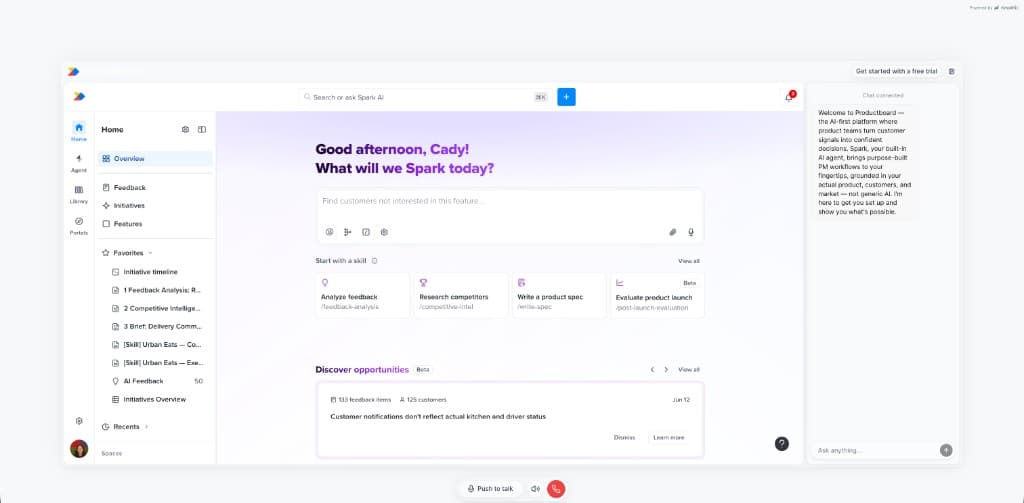
"Right now, we're using our Navattic agent as a scalable backup to our live demos, giving low-touch and self-serve prospects a real, interactive product experience 24/7, especially when they're interested but not quite ready to hop on a call with a human," says Elizabeth.
Where Productboard sees this in 1 to 2 years
"Looking out 1–2 years, we see agents becoming a core part of how we scale GTM for our lower-touch segments, handling more of the first-touch Q&A and personalized product walkthroughs so our sales and SE teams can spend their time on the conversations that really need a human," she says.
Neil sees this future use of agents as part of a bigger GTM shift: the lines between presales, sales, and CS are blurring. "We're seeing signs of a collapse of the GTM function with more forward-deployed engineer roles popping up. I think this is better for the end customer, because the same person who's picking up where an agent left off is the same person helping them implement the new software they've purchased."
For all the potential of agents, our team is also clear about the risks.
"There are human elements of buying and working with customers that are critical to preserve. Without thought and attention, automation can be overapplied to a detrimental degree. You have to know the distinction between when it makes sense and when it doesn't," says Neil.
Part of that is setting the right expectations. "There's clearly something super magical about new tech, but you have to be realistic," says Randy.
This is not the first inflection point they have bet on. As Chris puts it: "We got to help define the patterns sales and marketing folks adopted and suggest best practices at a huge industry transition before, and the opportunity to do it again with agents is even better."